Columbus, Montana · Licensed & Insured

Fencing Installation Services

Barbed wire, post & rail, jack leg, corrals, equine fence, and game fence, all installed by local fence contractors who build for Montana ground, weather, and livestock pressure.

Licensed & Insured
Fence Installation Near You in the Beartooth Region
Free On-Site Estimates

Fence Installation Services

Fence Built to Hold Up to Montana

Beartooth Fencing LLC is a licensed and insured fencing contractor based in Columbus, Montana. We handle the whole fence installation process, walking the line, fence design and layout, materials, setting fence posts, hanging gates, and cleanup for ranches, equestrian properties, and acreage owners across the Beartooth region.

Most of the fence we build is agricultural and equestrian: barbed wire fence, post & rail fence, jack leg fence, corrals, equine fence, and game fence. That's deliberate. These are the fence types that survive frost heave, rocky ground, deep snow, wind, and animals leaning on them, and they're what we've built our reputation on.

If you're comparing fence companies, the thing worth asking about is the corners. A fence line is only as strong as its brace assemblies, and that's the part that's easiest for fence builders to cut corners on and hardest to see from the road. We build braces to hold tension for the life of the fence.

  • Licensed & insured fence contractors based in Columbus, MT
  • Free on-site estimates and written fence quotes. No pressure
  • Fence installation, fence repair, fence replacement, and fence removal
  • All fence installation materials, fence posts, and tools supplied
  • Fence design and layout planning before the first hole gets dug
  • Complete fence construction. layout, build, gates, and cleanup
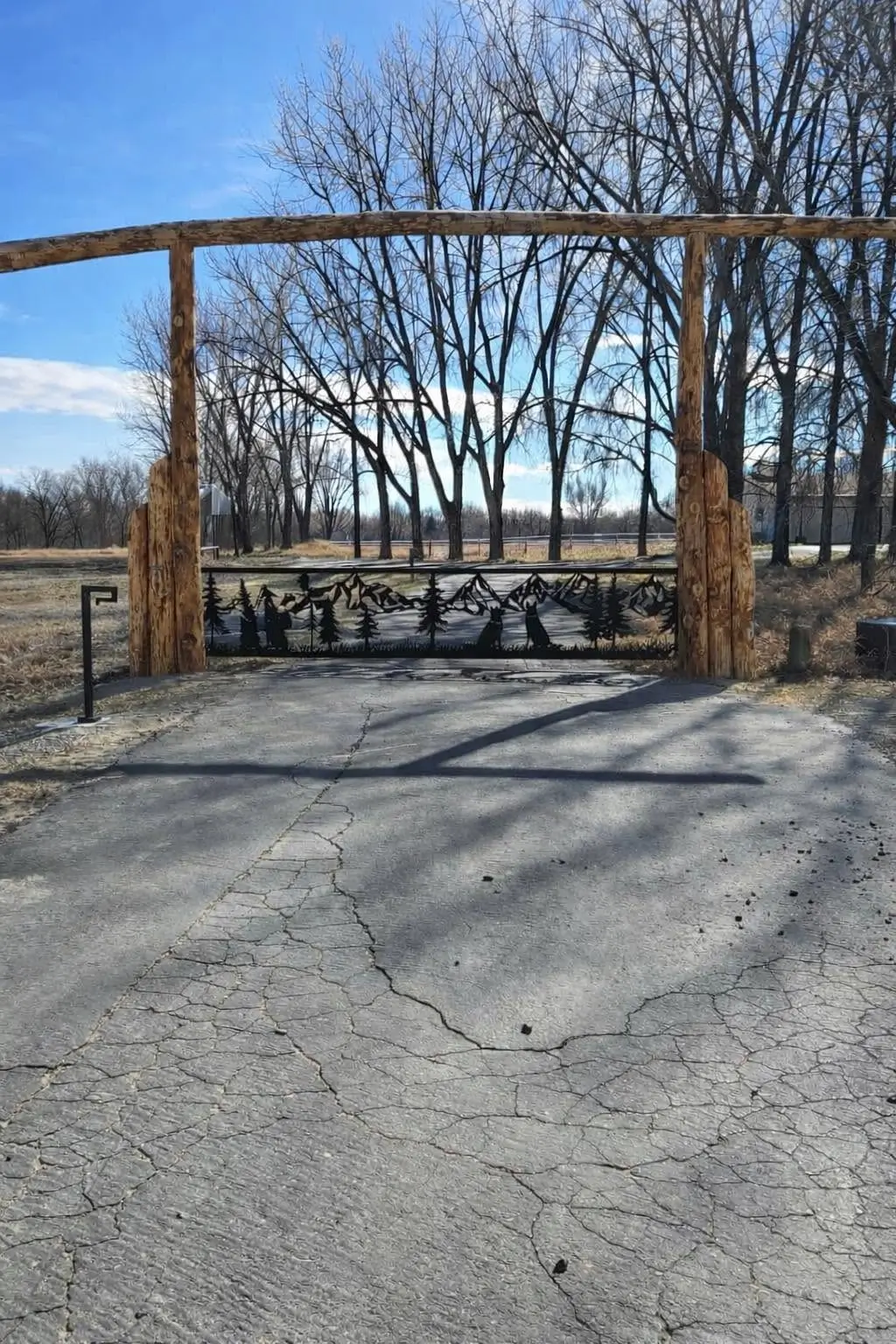
  • Fence customization: custom gates, archways, and one-off builds
  • Ranch and equestrian fence services for working and acreage properties
  • Utility locates called in on every project

Get a Free Fence Quote

Tell us what you're fencing and we'll come walk it with you. Written quote, no obligation.

Call (406) 425-0332

Call or Text

(406) 425-0332

Based In

Columbus, MT 59019

Hours

Mon-Sat, by appointment

Credentials

Licensed & insured general contractor

Fence Types We Install

Six Kinds of Fence, Built for Six Different Jobs

Picking the right fence type matters more than picking the most expensive one. Here's what each of these is actually good at.

Barbed wire fence installation on rangeland near Columbus, MT

Fence Type

Barbed Wire Fence

Barbed wire is still the workhorse of Montana rangeland, and for good reason: it covers long distances at the lowest cost per foot, it holds cattle, and a well-built line lasts decades with only light maintenance.

The difference between a barbed wire fence that lasts thirty years and one that sags in three is almost entirely in the posts and braces. We set corners and gate posts deep, build proper H-braces and double-H assemblies where the pull demands it, and stretch wire to the right tension instead of guessing at it.

  • Four- and five-strand cattle fence to rangeland standards
  • H-brace and double-H corner and end assemblies
  • Steel T-post, wood line post, and combination builds
  • Cross-fencing to divide pasture and rotate grazing
  • Wire stays, stretching, and re-tensioning of existing lines
  • Wire gates, tube gates, and cattle guard framing
Call for a Free Estimate
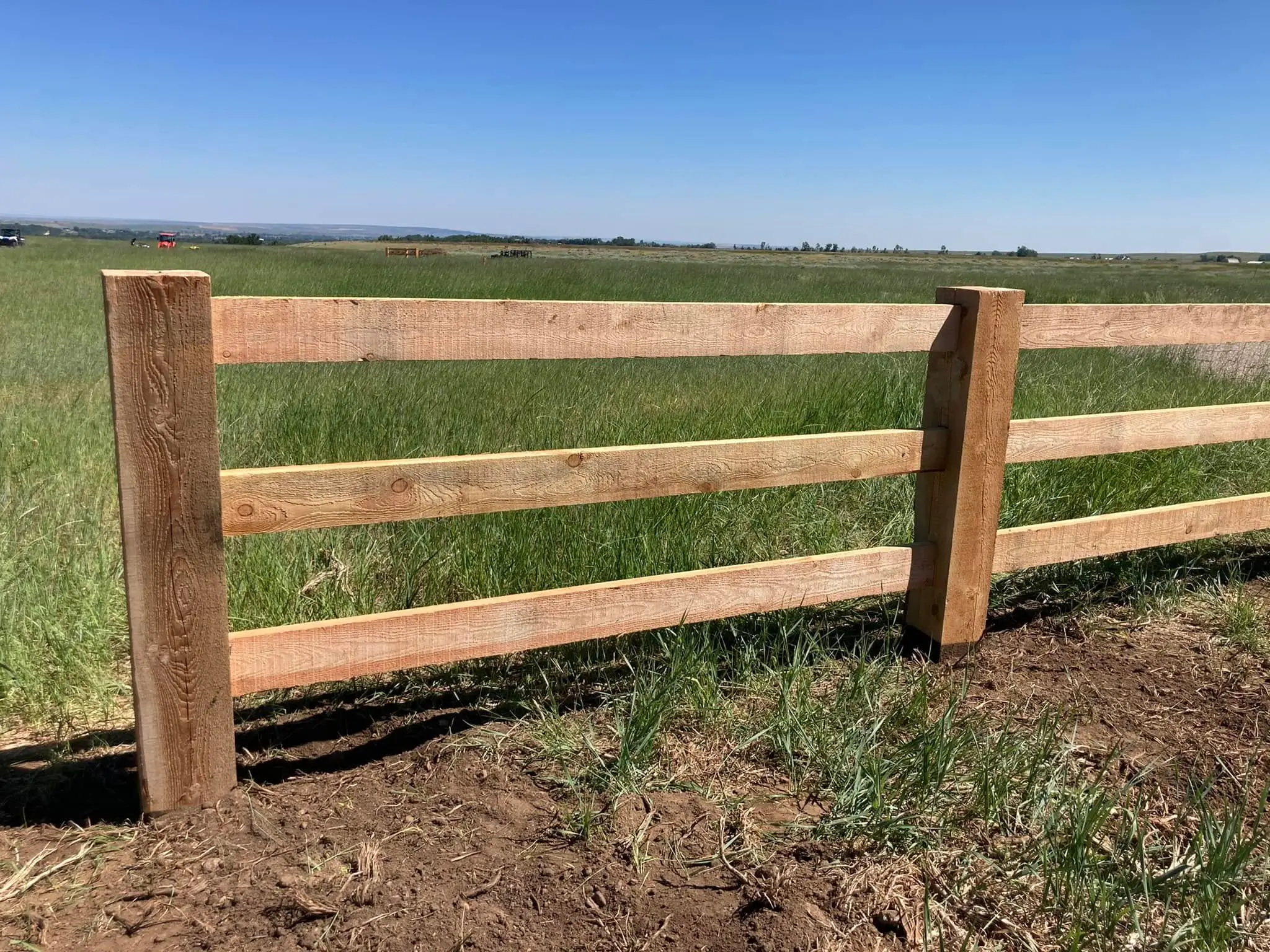
Wood post and rail fence installation, Beartooth region Montana

Fence Type

Post & Rail Fence

Post & rail is the fence people picture when they picture a ranch. It's a wood fence built for looks as much as containment; driveway frontage, entry drives, paddock perimeters, and the stretch of fence line your neighbors actually see.

Because it's a visual fence, the fence design details matter: consistent post spacing, rails set to a true line over rolling ground, and hardware that won't rust-stain the wood in a season. We build two-, three-, and four-rail configurations in treated posts and rough-sawn or milled rail.

  • Two-, three-, and four-rail wood fence configurations
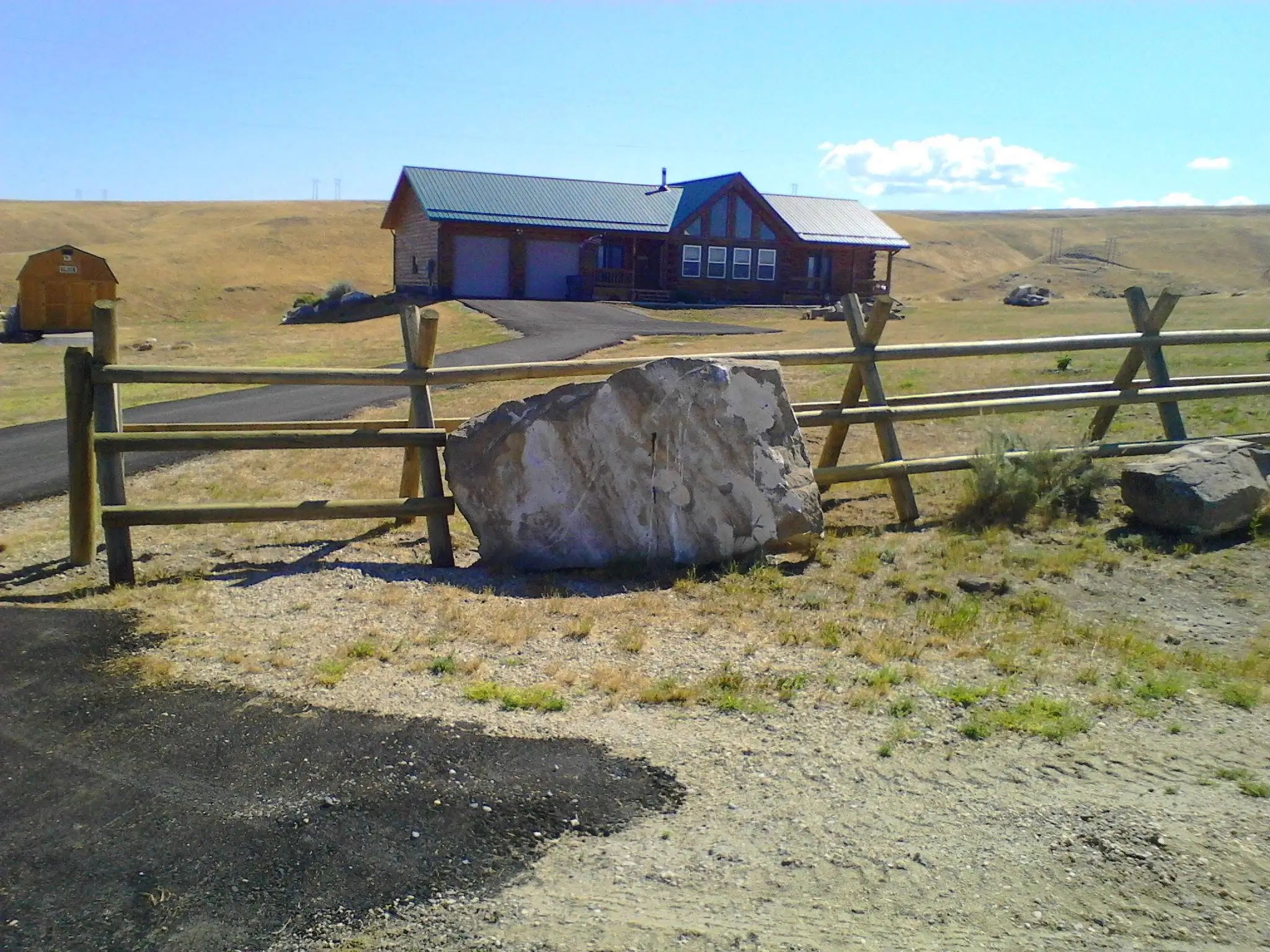
  • Treated posts set below frost line, or jack-leg style over rock
  • Driveway frontage, entrance runs, and property boundary lines
  • Paddock and turnout perimeters for horse property
  • Optional woven wire or mesh backing for small livestock
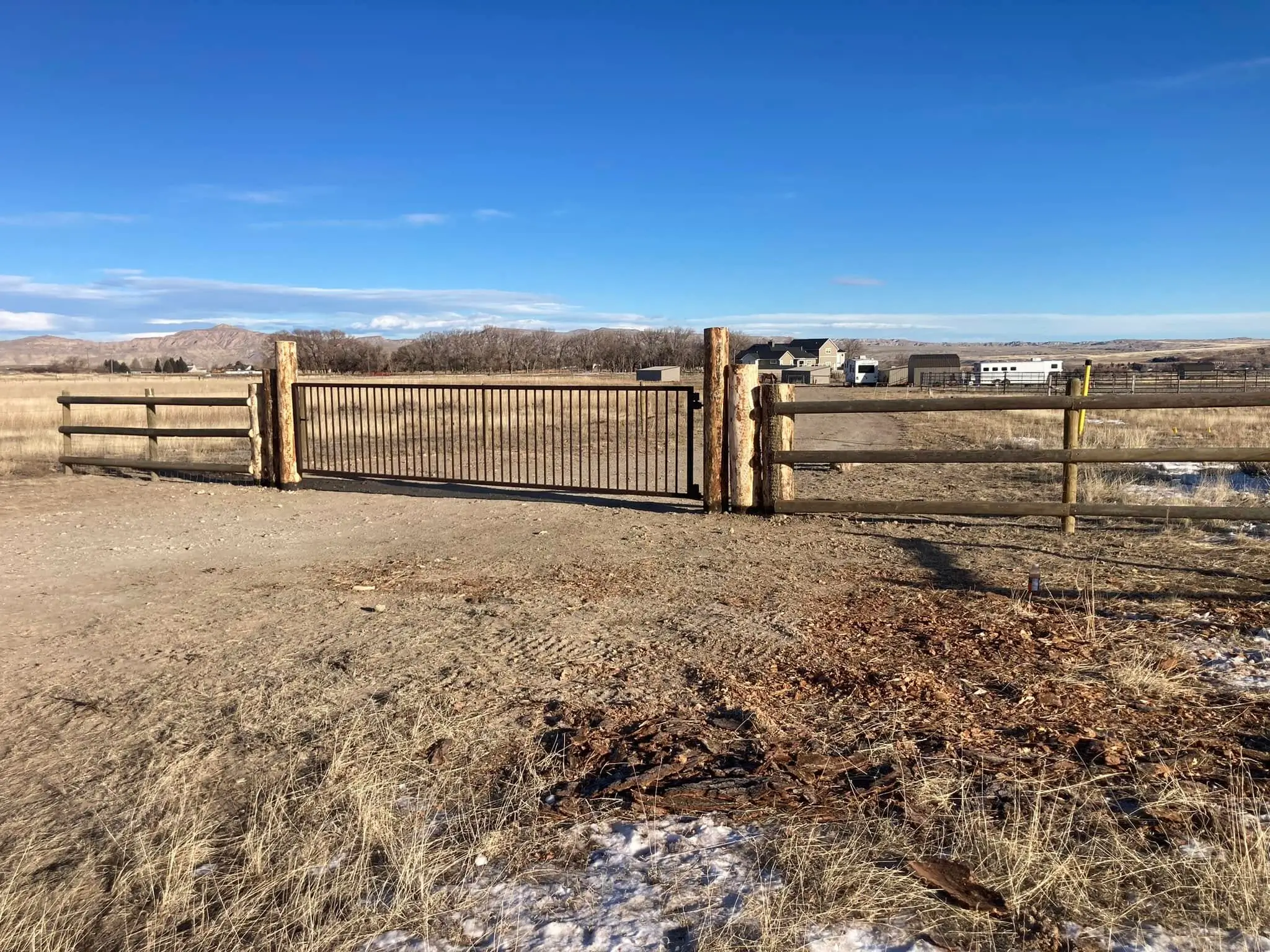
  • Matching gates, custom archways, and gate automation
Call for a Free Estimate
Jack leg buck and rail fence installed over rocky ground in Montana

Fence Type

Jack Leg Fence

Jack leg fence, or buck and rail, if that's what you grew up calling it, sits on top of the ground instead of in it. No post hole digger, no concrete mix, no fighting rock with an auger.

That makes it the right call in three situations Montana hands out constantly: shallow soil over bedrock, ground where frost heave keeps pushing set posts up, and places you may want the fence line moved later. It also handles deep snow better than most designs, because the A-frame legs shed drifting instead of catching it.

  • No post holes. installs over rock, gravel, and shallow soil
  • Immune to frost heave pushing posts out of the ground
  • Handles heavy snow load and drifting better than set-post fence
  • Movable sections when a layout needs to change
  • Blends with post & rail for a consistent look across a property
  • Common for boundary lines, driveways, and wildlife-heavy corridors
Call for a Free Estimate
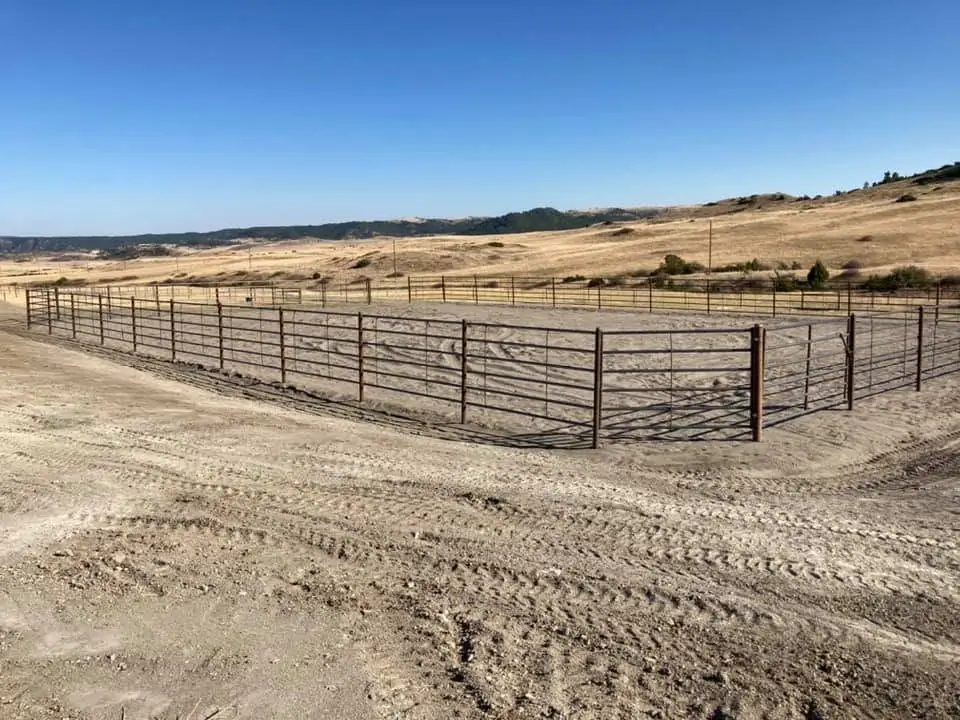
Livestock corral and working pen construction in Columbus, MT

Fence Type

Corrals & Working Pens

A corral isn't just strong fence in a small shape. It's a system, and the layout determines whether working cattle takes an afternoon or takes all day and gets somebody hurt.

We build corrals, sorting pens, alleys, and holding areas designed around how stock actually move: sight lines, gate swing, and flow from pen to alley to trailer. Materials get matched to the pressure: continuous panel and pipe where animals crowd hardest, wood and sucker rod where it makes sense on budget.

  • Working corrals, sorting pens, and holding pens
  • Alleys, sweeps, and loading chute framing
  • Continuous panel, pipe, sucker rod, and heavy wood construction
  • Layouts planned around stock flow and safe gate swing
  • Slam latches, bow gates, and man-pass gates
  • Repairs and expansion of existing corral systems
Call for a Free Estimate
Equine fence installation for horse property in the Beartooth region

Fence Type

Equine Fence

Horses find ways to hurt themselves on fence that cattle walk past without noticing. Equine fence is built around that fact: no barbs, no gaps a hoof fits through, no wire a panicked animal can wrap a leg in.

Our usual recommendation is no-climb woven wire or V-mesh with a wood top rail or sight board, so the horse can see the boundary from a distance and can't get a foot through it up close. It costs more per foot than barbed wire. It also costs less than one bad laceration and the vet bill behind it.

  • No-climb woven wire and V-mesh horse fence
  • Wood rail and sight-board tops for visibility
  • Vinyl and composite rail options on request
  • Electric top wire to stop cribbing and leaning
  • Paddocks, turnouts, arena perimeters, and dry lots
  • Full equestrian facility layout and fence design
Call for a Free Estimate
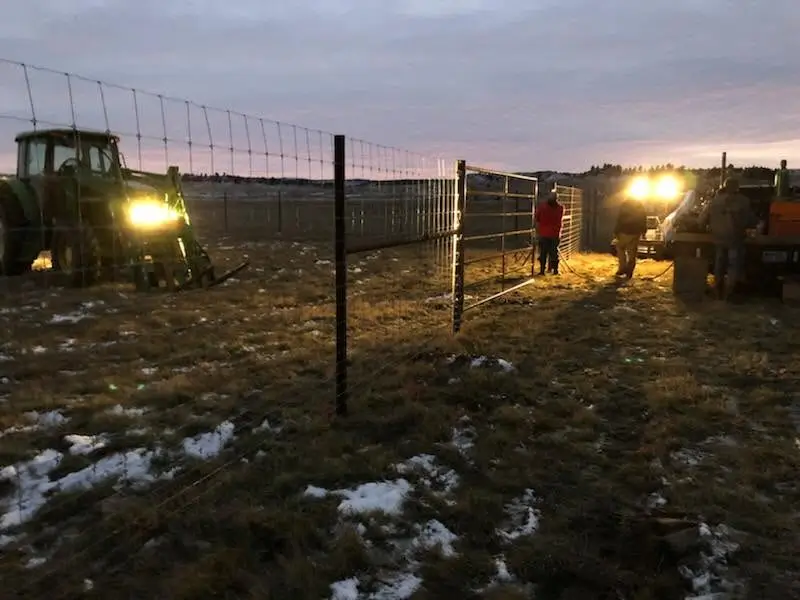
Tall woven wire game fence installation in Montana

Fence Type

Game Fence

Game fence is the heavy end of what we build. Eight-foot woven wire on posts set to hold it, engineered to keep elk and deer out of what you're protecting, or to keep game inside a managed boundary.

High fence is unforgiving of shortcuts. The wire is heavy, the spans are long, and the animals hitting it weigh several hundred pounds. Post depth, brace design, and wire tension all have to be right, and the line has to follow terrain closely enough that nothing can slip under a low spot.

  • 8-ft woven wire high fence for elk and deer exclusion
  • Orchard, hay ground, garden, and food plot protection
  • Managed game boundary and enclosure fencing
  • Heavy posts and braces engineered for high-fence tension
  • Terrain-following layout to close low spots and gaps
  • Matching tall gates and access points
Call for a Free Estimate

How It Works

Our Fence Installation Process

Six steps from your first call to the final walk-through. No surprises in the middle.

1

Free On-Site Walk-Through

We come out and walk the fence line with you. Terrain, rock, drainage, access, existing fence, and what you're actually trying to contain or keep out.

2

Fence Design & Written Quote

You get a fence design and a written quote with fence type, materials, footage, gate count, and timeline spelled out. Free, and no obligation to move forward.

3

Planning, Permits & Locates

Fence installation planning is where problems get avoided. We confirm property lines, check whether fence installation permits apply where you are, and call in utility locates before anything goes in the ground.

4

Clearing & Fence Removal

Brush and trees come off the line, and old fence gets pulled. posts out, wire rolled and hauled off. This is the fence installation preparation nobody photographs, and it decides how straight the finished line runs.

5

Setting Posts & Braces

Corners, ends, and gate posts go in first and get braced. Line posts follow on a true layout. Depth, spacing, and concrete get matched to soil and to the pull the fence will carry.

6

Wire, Rail, Gates & Walk-Through

Wire or rail goes up to proper tension, gates get hung and swung true, the site gets cleaned up, and we walk the finished fence with you before we leave.

Fence Installation Tips

Thinking About DIY Fence Installation?

Some fence is a reasonable weekend project. Some isn't. We'd rather tell you which is which than sell you something you didn't need; though the fence installation techniques that matter most, bracing and tension, are also the hardest to pick up from a fence installation video.

Reasonable to DIY

If you've got the time and a decent tool set, these are within reach for most property owners. the fence installation instructions on the product packaging are usually enough to get through them:

  • Short runs of T-post and wire on flat, soft ground
  • Small garden or dog-run enclosures
  • Temporary electric fence for rotational grazing
  • Replacing a handful of broken line posts
  • Re-tensioning wire that's only gone slack
  • Re-hanging a gate that's dropped out of square

Common Fence Installation Mistakes

Nearly every fence repair we get called out for traces back to one of these:

  • Undersized or unbraced corners, the single biggest cause of sag
  • Posts set above frost line, then heaved out over a winter or two
  • Over-tensioning wire so it snaps in the first hard cold snap
  • Skipping utility locates and hitting a line
  • Building on an assumed property line instead of a surveyed one
  • Barbed wire used around horses
  • Untreated wood in ground contact
  • Mixing hardware metals so the fasteners corrode out first

Cost & Planning

What Drives Fence Installation Cost

We don't publish a per-foot price, because the honest answer depends on ground you haven't shown us yet, and fence installation companies that do publish one are usually quoting the easiest possible conditions. Here's what actually moves the number.

What Changes Your Quote

These are the variables we're measuring when we walk your line:

  • Total linear footage of the fence line
  • Fence type and fence materials selected
  • Ground conditions; rock, gravel, sand, water table
  • Terrain: flat pasture vs. draws, ridges, and creek crossings
  • Number of corners, ends, and brace assemblies
  • Gate count, gate width, and any gate automation
  • Clearing, brush removal, and old fence removal
  • Site access for trucks, augers, and material drops

Fence Installation Checklist

Have these answers ready and your fence quote gets faster and tighter:

  • What are you containing or keeping out, and how much pressure will it put on the fence?
  • Roughly how many feet, and is the line surveyed?
  • Where do gates need to go, and how wide for your equipment?
  • Is there existing fence to remove, or are we building on clear ground?
  • Any known rock, buried utilities, springs, or septic on the line?
  • Subdivision covenants or county setbacks to work around?
  • Your target window, and how firm it is

Tools & Materials We Bring

All the fence installation tools and materials the job needs show up on our trucks. You don't source anything:

  • Skid-steer and tractor-mounted post hole digger and auger
  • Hydraulic post driver for T-post and line post
  • Concrete mix for corner, end, and gate posts
  • Wire stretchers, come-alongs, and tension gauges
  • Level, measuring tape, and string line for true layout
  • Saw, drill, impact driver, screwdriver, pliers, and hammer
  • Fence posts, wire, rail, panel, gates, and hardware

Questions

Fence Installation FAQs

The questions we get asked most often, answered straight.

How much does fence installation cost in Montana?

Fence installation cost depends on linear footage, fence type, ground conditions, the number of corner and brace assemblies, gates, and how much clearing or old fence removal is needed. Rocky ground and long spans of rough terrain cost more per foot than flat, open pasture.

We don't publish per-foot pricing because those variables swing the number too far to quote honestly from a desk. We walk the fence line with you and give you a written fence quote for free.

How long does a fence installation take?

A short driveway run of post & rail or a small corral is often a one- to two-day job. A quarter-mile of barbed wire fence usually takes a few days. Large game fence projects and full ranch perimeters are measured in weeks.

Ground conditions, weather, and site access drive the fence installation timeline more than anything else. We give you a realistic schedule with your quote rather than an optimistic one.

Do I need a permit for a fence in Stillwater County?

Agricultural fence on private acreage in Stillwater County and the surrounding rural areas typically doesn't require a building permit, but rules differ inside city limits, in subdivisions with covenants, and near county road right-of-way.

Fence installation permits are worth checking before we dig rather than after. We'll tell you what we know about your area and point you to the right office, and we call in utility locates on every project regardless.

What is the best fence type for horses?

For horses we recommend no-climb woven wire, V-mesh, or a wood rail fence. Usually with a sight board or top rail so the horse can see the boundary clearly from a distance.

Barbed wire is a poor choice around horses. A panicked animal can cut itself badly on it. Equine fence is one of the places where spending more up front genuinely reduces vet bills later.

Why choose a jack leg fence instead of a set-post fence?

Jack leg fence, also called buck and rail, sits on the surface instead of in a post hole. That makes it the right answer where you hit rock a foot down, where the water table is high, or where frost heave keeps pushing set posts out of the ground.

It's also movable if a layout needs to change later, and it sheds deep snow better than most set-post designs.

Should I repair or replace my old fence?

If the posts and brace assemblies are still sound and the problem is loose or broken wire, a fence repair is usually the better value.

Once posts are rotting at the ground line, braces are failing, or you're patching the same stretch every spring, fence replacement costs less over the life of the fence than repeated repairs. We'll give you an honest read after walking the line, including when the answer is "this doesn't need us yet."

Can you install fence in the winter?

Sometimes. Frozen ground makes digging post holes slow and expensive, and concrete needs extra care in the cold, so most set-post work gets scheduled for the open season.

Jack leg fence and many repairs can go in year-round because they don't require post holes. Call us and we'll tell you honestly whether your project should wait for spring.

Do you handle old fence removal and cleanup?

Yes. Fence removal is part of most replacement projects. We pull old posts, roll and haul off old wire, and clean up the line so the new fence goes in on clear ground.

Leaving loose wire in a pasture is a hazard to livestock and equipment, so we don't leave it behind.

Do you supply the fence materials, or do I?

We supply everything; fence posts, wire, rail, panel, gates, hardware, and concrete. It's all itemized in your quote. You don't need to coordinate with fence suppliers or figure out how much wire a run takes.

If you've already bought materials or want a specific product used, tell us at the walk-through and we'll build the quote around it.

Do you offer fence installation near me?

We're based in Columbus, MT and work throughout the Beartooth region; Absarokee, Laurel, Billings, Red Lodge, Big Timber, and the ranch country in between.

If you're outside that list, call anyway. Larger projects justify a longer drive, and we'll tell you straight if you'd be better served by fence installers closer to you.

Beyond New Installation

Fence Repair, Replacement & Maintenance

We don't only build new fence. Most properties around here have a line that needs attention rather than a line that needs starting over.

Fence Repair Services

Fast fixes and structural repairs on existing fence of any type:

  • Storm, snow load, and downed-tree damage
  • Wildlife and vehicle impact damage
  • Broken wire splicing and full-line re-tensioning
  • Rotted and heaved post replacement
  • Rebuilding failed corner and brace assemblies
  • Gate re-hang, latch, and hinge repair

Fence Replacement & Removal

When repair stops making financial sense, we start clean:

  • Full-line fence replacement on the existing route or a new one
  • Fence removal with posts pulled and wire rolled off-site
  • Section-by-section phasing to keep stock contained throughout
  • Upgrading barbed wire to horse-safe woven wire
  • Converting problem set-post runs to jack leg over rock
  • Old fence line cleanup so nothing is left in the pasture

Fence Maintenance

Cheap habits that add years to a fence:

  • Walk the whole line each spring after thaw
  • Check corner and brace assemblies before checking wire
  • Re-tension in spring rather than in the heat of August
  • Clear brush and volunteer trees off the line annually
  • Stain or seal wood fence on a regular cycle
  • Fix small breaks the week you find them, not the season after

Ready to Get Your Fence Quote?

Call us and we'll come walk the line with you. Free on-site estimate, written quote, no pressure.

(406) 425-0332

Where We Work

Fence Installation Across the Beartooth Region

Based in Columbus, Montana, installing fence for ranches, horse properties, and acreage owners throughout the surrounding area.

Looking for fence installation near you and not sure whether you're in range? Call and we'll tell you in about thirty seconds.

Call to Confirm Your Area